GLOBAL EDUCATION GUIDE
What is Global Education?
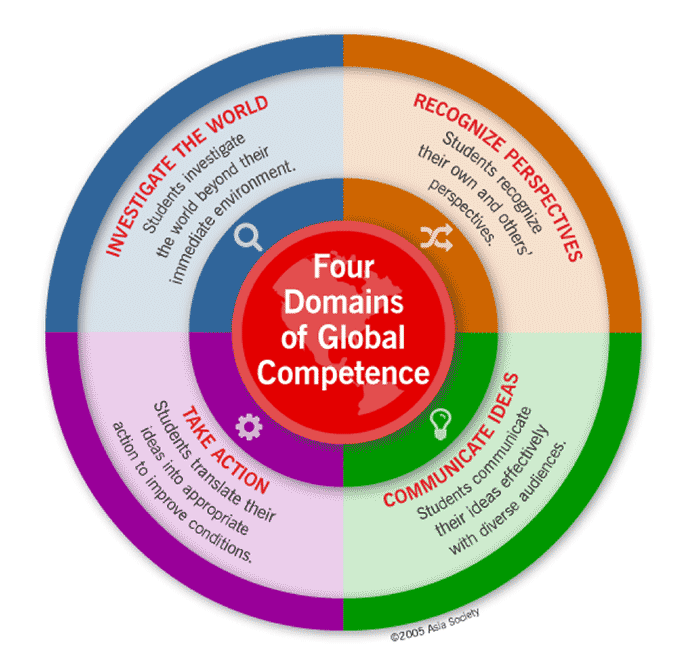
Global education can be described as the type of education that provides students with skills that help them understand their connection with communities around the world. This may involve a basic understanding of different languages, geography, and cultural expressions. Global education includes 4 basic global competencies:
- Investigating the World.
- Recognizing Perspectives
- Communicating Ideas
- Taking Action
According to Asia Society experts, the development of each competence should provide our students with the tools they need to navigate our world as well-rounded individuals.
Frequently Asked Questions:
- How does the globally competent student investigate the world? The globally competent student is able to investigate the world by identifying challenges, generating meaningful questions about issues, and giving thorough explanations.
2. How does the globally competent student weigh perspectives? The globally competent student is able to weigh perspectives by recognizing the perspectives of others, examining and expressing his or her own perspectives, and explaining the influence of culture.
3. How does the globally competent student communicate ideas? The globally competent student communicates ideas by recognizing and expressing the perspectives of others, communicating with diverse groups, and efficiently using technology to communicate with others.
4. How does the globally competent student take action? The globally competent student takes action by creating ways to help others, weighing options and creating action plans, and collaborating with others when taking action.
Sustainable Development Goals and Global Competence
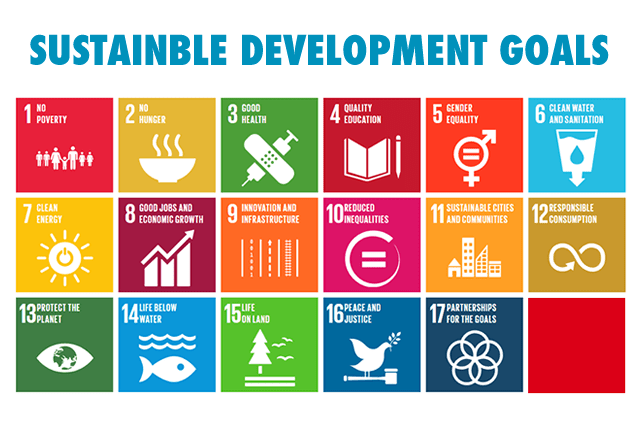
The United Nations has developed 17 goals in order to address poverty, inequality, and injustice around the globe. The Four Domains of Global Competence provide students and educators with the framework needed to help address these goals.
Rationale For Global Education Guide
Americans live in a globally-connected society. We eat produce shipped from Latin America, use technology designed in Asia, and drive cars manufactured in Europe. According to statistics, Tennessee saw a 79% increase in the foreign-born population between 2000 to 2010. With this in mind, it is critical that we offer students tools that help them navigate our interconnected world. The purpose of this guide is to provide educators and members of the community with resources to help our students become global citizens. It offers information on assessments, international learning opportunities, and local resources. This guide also features information on study abroad programs for students and teachers.
How to Use The Global Education Guide
The guide offers educators and students a variety of resources that can be used in the classrooms. It is divided into three main categories: Study, Teach, and Travel. Each category lists a unique set of global education materials and tools. Some tools can be used by students, while other tools are better suited for teachers. Many resources in the guide may be used by both groups. In addition to offering information about resources that help facilitate global competence, the guide also features a blog that chronicles my experience in Senegal as a Fulbright Teachers for Global Classrooms Fellow. I hope this guide serves as a source of inspiration for those who have a desire to help students explore the world and all it has to offer. Let the journey begin.
This website is not an official U.S. Department of State website. The views and information presented are the participant’s own and do not represent Fulbright Teachers for Global Classrooms Program, the U.S. Department of State, or IREX.
 Tanisha Travels